
A Patient Recovery Story About Achalasia and the POEM Procedure
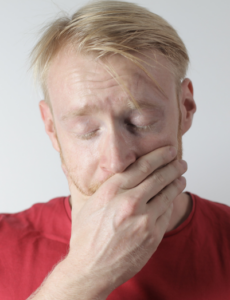 For nearly 10 years, Paul Davis lived with progressively worsening difficulty swallowing. What began as an occasional problem eventually affected every meal. During the eight or nine months before treatment, he struggled to swallow every bite of food and even his morning coffee. The sensation of food stuck in throat made eating stressful, especially during social occasions and business meals. At times, he had to leave the table.
Paul’s dysphagia also affected his nights. Liquids that did not pass through his esophagus collected overnight, causing coughing and a gurgling sensation. These interruptions disturbed both his sleep and his wife’s sleep. Although people with swallowing problems may also use terms such as gagging or throat pain to describe their discomfort, Paul specifically reported obstructed swallowing, nighttime coughing and gurgling—not persistent throat pain.
A Diagnosis That Finally Explained the Problem
Paul was diagnosed with achalasia, an esophageal motility disorder in which the muscle at the lower end of the esophagus does not relax properly to allow food and liquid to pass. “Acalasia” is a common misspelling of achalasia. For Paul, receiving the correct diagnosis was an essential step toward restoring his swallowing function.
Acalasia is one of several esophageal conditions that can interfere with eating and drinking. While swallowing therapy may help some people whose swallowing problems have other causes, Paul needed treatment directed at the muscle that was preventing food and liquid from moving into his stomach.
The Treatment: Peroral Endoscopic Myotomy (POEM)
 Paul met Amrita Sethi MD, Medical Director of the Northwestern Medicine Center for Advanced Endoscopy. Dr. Sethi recommended Peroral Endoscopic Myotomy, also called the POEM procedure.
POEM is an advanced, minimally invasive endoscopic treatment performed through the mouth, without external incisions. During the procedure, the physician creates a tunnel within the wall of the esophagus and cuts selected muscle fibers that are not relaxing properly. The goal is to help food and liquid pass more easily and improve swallowing.
Near-Immediate Improvement in Swallowing
Paul described the change after treatment as near immediate. His swallowing recovery progressed quickly, and he said he felt restored to the way he had been before his symptoms became severe. He could once again eat and swallow normally, including foods he had been unable to enjoy before treatment.
His experience with eating after surgery followed a gradual progression. He began with liquids, advanced to soft foods and returned to solid food over approximately a couple of weeks. He reported very limited pain—only once or twice during the first couple of days—and did not describe ongoing throat pain.
Back to a Normal Diet and Restful Nights
After the POEM procedure, Paul returned to a normal diet and no longer had to approach every bite with anxiety. His nighttime coughing and gurgling stopped because liquids were no longer accumulating in his esophagus. That relief led to improved sleep quality for both Paul and his wife.
Most importantly, Paul regained the freedom to eat with other people without worrying about swallowing, leaving the table or feeling that food would not go down. His patient recovery story shows how an accurate diagnosis and a treatment tailored to the cause of dysphagia can have a meaningful impact on daily life.

Advanced Digestive Care at Northwestern Medicine CAE
The Northwestern Medicine CAE, formally known as the Northwestern Medicine Center for Advanced Endoscopy at Central DuPage Hospital, diagnoses and treats complex digestive diseases. The center brings together experienced interventional endoscopists, advanced imaging, flexible robotic platforms, artificial intelligence-enabled technology and multidisciplinary care teams in one western-suburbs location.
The center treats esophageal motility disorders such as achalasia, along with Barrett’s esophagus, complicated reflux disease, pancreatic and bile duct disorders, gastroparesis, gastrointestinal cancers, complex polyps and other digestive conditions. Its physicians use minimally invasive endoscopic approaches when appropriate, which may support less pain and faster recovery than more invasive options.
Patients also have access to nurse navigators who provide guidance from the first phone call through recovery and follow-up. When a complex condition requires several specialties, the center coordinates care with surgery, oncology, interventional radiology and other teams to develop an individualized treatment plan.


