
A cancer diagnosis can turn life upside down. For many people, the prospect of surgery, chemotherapy or radiation brings questions not only about survival, but also about what life will look like after treatment.
Today, cancer immunotherapy is giving some patients another path. For a specific group of people with rectal cancer, a type of colorectal cancer, treatment with immunotherapy may make it possible to avoid surgery, chemotherapy and radiation.
But there is an important distinction: This approach is not appropriate for everyone with colorectal or colon cancer. The type and stage of cancer, along with results from tumor testing, help determine which cancer treatment options may be appropriate.
A Rectal Cancer Story That Started With One Small Symptom
 In a GoToHealth! interview, Dan Santonocito shared how a small drop of blood led him on an unexpected journey.
Dan was 44, a father of three, and had no family history of cancer. At first, he hoped the bleeding would go away. But when it continued and he began noticing changes in his bowel habits, he spoke with his doctor.
A colonoscopy revealed stage III rectal cancer.
After his diagnosis, Dan began researching treatment options. He found information about an immunotherapy medicine called JEMPERLI, also known as dostarlimab, and brought it to his oncologist. Testing showed that his tumor had a feature called mismatch repair deficiency, or dMMR. He also learned that he had Lynch syndrome, an inherited condition that increases the risk of colorectal and certain other cancers.
Dan and his doctor decided to pursue immunotherapy. In the interview, he says he was later declared cancer-free and that the coming December would mark three years since then. He reports no lasting side effects and says he has been able to work, travel and spend time with his family.
Dan’s experience is one person’s story, not a guarantee of what another patient can expect. He also identifies himself in the interview as a spokesperson for GSK, the company that markets JEMPERLI.
How Does Cancer Immunotherapy Work?
Immunotherapy for cancer helps the immune system recognize and fight cancer cells. It works differently from chemotherapy, which uses medicines to destroy rapidly growing cells.
JEMPERLI is a type of immunotherapy called a checkpoint inhibitor. It blocks a protein called PD-1, helping immune cells respond to cancer.
Some tumors have features known as dMMR or microsatellite instability-high, often shortened to MSI-H. These features indicate problems with the way cells repair certain DNA errors. Such tumors may be more likely to respond to checkpoint inhibitor immunotherapy.
Who May Be Eligible for JEMPERLI?
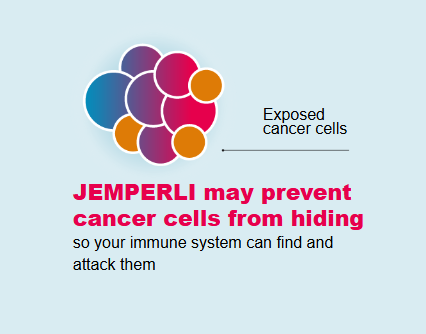 In October 2026, the U.S. Food and Drug Administration granted accelerated approval for JEMPERLI alone for adults with stage II or stage III locally advanced rectal cancer whose tumors are dMMR or MSI-H, as determined by an FDA-authorized test.
The study supporting the approval enrolled patients who had not previously been treated for their rectal cancer. In that study, 110 of 154 patients—about 71%—received JEMPERLI alone, had no additional cancer treatment and had not experienced disease progression at the time the results were analyzed.
The study did not compare JEMPERLI with another treatment group, and researchers are still following patients to understand how long the benefits last. Some patients did need additional treatment, including surgery. Accelerated approval means further evidence may be required to confirm the treatment’s lasting clinical benefit.
This approval is specifically for certain rectal cancers. It does not mean that everyone with colon cancer can safely skip surgery or chemotherapy. Other immunotherapy treatments may be options for some people with advanced colorectal cancer, depending on their individual circumstances.

Questions to Ask Your Cancer Care Team
A conversation with a medical oncology specialist can help you understand your diagnosis and options. Consider asking:
- Is my cancer in the colon or the rectum, and what stage is it?
- Has my tumor been tested for dMMR or MSI-H?
- Should I consider genetic counseling or testing for Lynch syndrome?
- Is immunotherapy an option for me? Why or why not?
- What are the benefits and risks of each recommended treatment?
- How will my response be monitored, and what happens if the cancer returns?
The Takeaway
Immunotherapy has opened a promising new chapter in cancer treatment. For some people with a specific type of locally advanced rectal cancer, it may offer a way to avoid surgery, chemotherapy and radiation while remaining under close medical follow-up.
For others, those treatments remain essential. The most important next step is to understand your diagnosis, ask about biomarker testing and work with your care team on a plan tailored to you.

