
WHAT IS COLORECTAL CANCER AND WHY SHOULD YOUNG PEOPLE CARE?
 Colorectal cancer, often referred to simply as colon cancer or CRC, begins when abnormal cells grow in the lining of the colon or rectum. In most cases, the disease starts as a small, noncancerous growth called a polyp. Over time, some polyps undergo changes and become cancerous. Because this process is gradual, colorectal cancer is one of the most preventable cancers when caught early through proper screening. The tragedy is that too many people, especially younger adults, are not being screened and are not recognizing the warning signs until the disease has already progressed.
Oncology and gastroenterology specialists have been raising alarms about the early-onset trend for years. Between 1995 and 2019, the proportion of colorectal cancer patients diagnosed under the age of 55 doubled, rising from 11 percent to 20 percent of all cases, according to data from the American Cancer Society. By 2030, researchers project that more than 27,000 people under the age of 50 will be diagnosed with colorectal cancer each year, and that the incidence of early-onset colorectal cancer will have increased by more than 140 percent compared to earlier decades.
Among adults under 50, colorectal cancer has become the number one cause of cancer death in men and the number two cause in women. These are not abstract statistics. They represent real people, many of them parents, spouses, and professionals in the prime of their lives, who are losing their lives to a disease that can often be detected and treated successfully when found early.
BY THE NUMBERS
1 in 24 men and 1 in 26 women will be diagnosed with colorectal cancer in their lifetime. In 2024 alone, an estimated 152,810 new cases were expected, along with 53,010 deaths. There are currently more than 1.3 million people living with colorectal cancer in the United States. Despite these numbers, colorectal cancer lacks its own dedicated research program in the Department of Defense Congressionally Directed Medical Research Program, making it one of the most underfunded cancers relative to its impact.
WHAT ARE THE SYMPTOMS OF COLON CANCER?
One of the most dangerous aspects of colorectal cancer is that it often produces no symptoms in its early stages. Many people feel completely healthy until the disease has already advanced. This is precisely why awareness and regular cancer screening are so critical. When symptoms do appear, they can be subtle and easy to dismiss, especially in younger patients whose doctors may not immediately suspect cancer.
Knowing what are the symptoms of colon cancer could save your life. The following warning signs should never be ignored, regardless of your age.
 Blood in stool is one of the most significant and commonly overlooked symptoms. Blood in the stool can appear bright red or dark, and it may be visible in the toilet bowl or on toilet paper. It is important to understand that blood in stool is never normal. It does not automatically mean cancer, but it always warrants a medical evaluation. A recent study presented at the American College of Surgeons Clinical Congress found that in patients under 50, rectal bleeding was the strongest predictor of colorectal cancer, increasing the odds of a diagnosis by 8.5 times.
Persistent changes in bowel habits are another key warning sign. If you experience ongoing diarrhea, constipation, or notice that your stool has become unusually thin or pencil-shaped, these changes deserve attention. A narrowing of the stool can indicate that something is partially obstructing the colon, such as a growing tumor. When these changes last more than a few days and have no obvious explanation, they should be discussed with a healthcare provider.
Other colon cancer symptoms include ongoing abdominal pain, cramping, or bloating that does not resolve; unexplained weight loss; persistent fatigue or weakness, sometimes caused by anemia from internal bleeding; and a feeling that the bowels cannot be fully emptied even after a bowel movement.
The challenge is that many of these colon cancer symptoms overlap with far more common and less serious conditions, including hemorrhoids, irritable bowel syndrome, and inflammatory bowel disease. This overlap is one reason why diagnosis is often delayed in younger patients. According to data from the American College of Surgeons, the average time between a young adult first noticing symptoms and receiving a colorectal cancer diagnosis is more than six months. Nearly half of young adults with colorectal cancer reported seeing blood in the toilet before their diagnosis, yet many waited or were told to wait before being properly evaluated.
 “I think a lot of prevention starts with awareness. We have all seen patients who had rectal bleeding that was dismissed as hemorrhoids or IBS symptoms for a while before they were found to have colorectal cancer. Knowing your family history is also critically important.”
— Paula Denoya, MD, FACS, FASCRS
Colorectal Surgeon, Stony Brook Cancer Center
CoC State Chair, Eastern Long Island-NY Chapter, American College of Surgeons
If you notice any of these symptoms, especially rectal bleeding, do not wait it out. Ask your doctor to evaluate you. If your concerns are dismissed without a clear plan for follow-up, seek a second opinion. You know your body, and persistent or unusual symptoms deserve a thorough investigation.
A SECTION FROM FIGHTCRC: FIGHTING FOR EVERY PATIENT
Source: fightcrc.org
Fight Colorectal Cancer, known as FightCRC, is one of the nation’s leading patient empowerment and advocacy organizations dedicated to colorectal cancer. Their mission is to fight for a future where every person diagnosed with colorectal cancer has time to create memories, explore treatment, and live fully. FightCRC provides education, support services, and advocacy resources for patients, caregivers, and survivors at every stage of the colorectal cancer journey.
FightCRC emphasizes that colorectal cancer is highly preventable and more treatable when caught early. The organization advocates for expanded screening access, increased research funding, and greater public awareness of the rising rates of early-onset colorectal cancer. They point out that among the top five cancer killers in the United States, colorectal cancer is the only one without its own dedicated research program in the Department of Defense, a disparity that leaves patients and researchers without critical funding.
FightCRC’s educational resources cover the full spectrum of the colorectal cancer experience, from understanding your diagnosis and navigating treatment options to finding support services and connecting with a community of fellow patients and survivors. Their website at fightcrc.org includes a screening quiz to help individuals assess their risk, detailed information on colonoscopy preparation, insurance and screening coverage guides, and information on blood tests as an emerging screening option.
The organization also highlights the significant health disparities that affect colorectal cancer outcomes across racial, ethnic, and socioeconomic groups. Black Americans, Indigenous communities, and people in areas with fewer healthcare resources face higher rates of colorectal cancer and lower rates of screening. FightCRC works with community partners to address these disparities and ensure that all people have access to life-saving screening and care.
For patients and families navigating a colorectal cancer diagnosis, FightCRC offers support services including patient education, connection to clinical trials, financial assistance resources, and a community of advocates who understand the journey firsthand. The organization’s ChatCRC tool provides immediate, personalized guidance for patients who have questions about their diagnosis, treatment, or next steps.
NORMA FLORES: A PROMISE KEPT
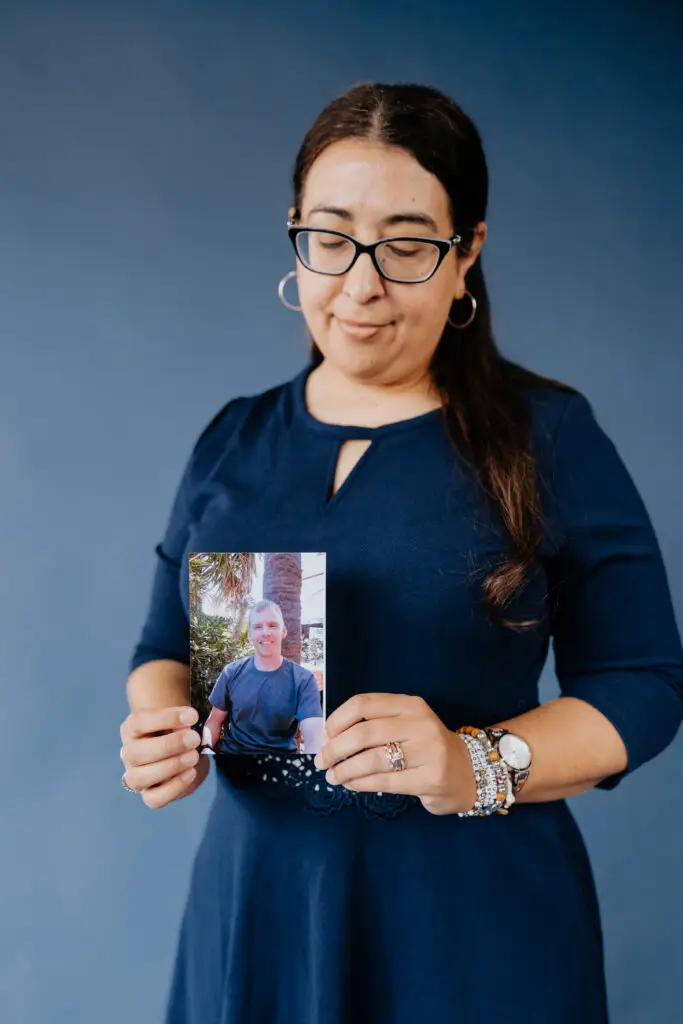 Norma Flores is a history professor and a FightCRC Ambassador whose life was changed forever when her husband Rob was diagnosed with rectal cancer at the age of 40. Rob had no family history of colorectal cancer and was otherwise healthy. His diagnosis came as a shock, and the journey that followed was one of surgeries, chemotherapy, and ultimately, the loss of a young husband.
As part of his treatment, Rob underwent a full rectal resection and received a permanent ostomy, a surgical procedure in which the colon is rerouted to an opening in the abdomen called a stoma. Waste is then collected in an external pouch known as a colostomy bag. A colostomy can be a frightening prospect for patients and families, but Norma is clear that people can and do live full, active, and meaningful lives with an ostomy. The adjustment is real, but it is not the end of life as one knows it.
Before Rob passed away, Norma made him a promise: she would keep showing up. She has honored that promise by becoming one of the most dedicated voices in the colorectal cancer awareness movement. She travels to Washington, D.C. to advocate directly with lawmakers for increased research funding for colorectal cancer, and she works with FightCRC to support patients and caregivers who are walking the same difficult road she once walked.
Norma’s message to those facing a stage 4 cancer diagnosis is one of hope. She emphasizes that there are many stage 4 cancer “thrivers,” people who have been living with advanced colorectal cancer for years, thanks to advances in oncology and treatment. A diagnosis of stage 4 cancer is not an immediate death sentence, and the landscape of treatment continues to improve. What matters most, she says, is knowing the symptoms, advocating for yourself with your medical team, and connecting with a community that understands what you are going through.
Norma’s story is a reminder of why awareness matters. Rob’s cancer was not caught early. The symptoms were there, but they were not recognized or acted upon in time. Her advocacy work is driven by the conviction that no other family should have to go through what hers did, and that with the right information and the right support, more lives can be saved.
THE AMERICAN COLLEGE OF SURGEONS: EXPERT GUIDANCE ON COLORECTAL CANCER
Source: facs.org/crc
 The American College of Surgeons (ACS) is a scientific and educational organization founded in 1913 to raise the standards of surgical practice and improve the quality of care for all surgical patients. With approximately 90,000 members, it is the largest organization of surgeons in the world. The designation “FACS” after a surgeon’s name signifies that they are a Fellow of the American College of Surgeons, a credential that reflects a commitment to the highest standards of surgical care and ethics.
The American College of Surgeons has made colorectal cancer awareness a major public health priority, particularly in response to the alarming rise of early-onset colorectal cancer. Through its Commission on Cancer (CoC) and the National Accreditation Program for Rectal Cancer (NAPRC), the ACS works to ensure that patients receive high-quality, team-based cancer care at accredited hospitals and facilities across the country. When seeking care after a colorectal cancer diagnosis, patients are encouraged to look for CoC-accredited or NAPRC-accredited facilities, which meet rigorous standards for cancer treatment and multidisciplinary care.
The ACS emphasizes that early onset colorectal cancer, defined as colorectal cancer diagnosed before the age of 50, is increasing at a rate that demands urgent attention. Symptoms in younger adults are sometimes missed or attributed to less serious conditions, which can lead to significant delays in diagnosis. The ACS advises that if you notice concerning symptoms, especially rectal bleeding, you should not wait it out. Ask to be evaluated, even if you are younger than the standard screening age of 45.
A 2025 study presented at the ACS Clinical Congress found that in patients under 50, rectal bleeding was the strongest predictor of colorectal cancer, increasing the odds of a diagnosis by 8.5 times. Critically, 70 percent of young patients diagnosed with colorectal cancer in that study had no family history of the disease, and 88 percent underwent a colonoscopy because of symptoms rather than routine screening. These findings underscore the importance of taking symptoms seriously and not relying solely on family history as a guide to risk.
Paula Denoya, MD, FACS, FASCRS, a colorectal surgeon at the Stony Brook Cancer Center and a CoC State Chair for the American College of Surgeons, has been a prominent voice in raising awareness about the rise of colorectal cancer in younger adults. Dr. Denoya notes that many patients she sees have had symptoms for months before receiving a proper diagnosis, often because their complaints were initially attributed to hemorrhoids or irritable bowel syndrome. She stresses that awareness is the foundation of prevention, and that both patients and physicians need to take symptoms in younger adults more seriously.
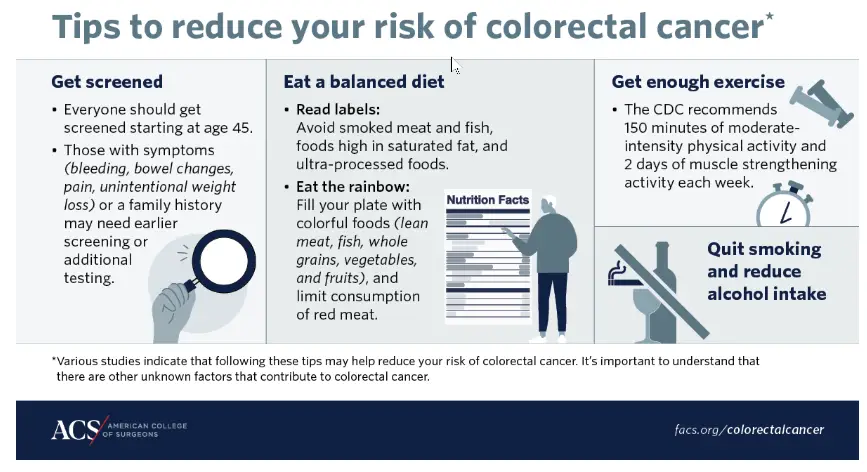
The ACS also notes that researchers have documented a 15 percent increase in colon cancer diagnoses in people aged 18 to 50 since 2004, based on hospital data from the National Cancer Database. By comparison, the increase in adults aged 45 to 55 during the same period was only 3 percent. The causes of this rise are not fully understood, but experts believe they include environmental changes, potential exposure to toxins, genetic factors, and lifestyle factors such as high consumption of ultra-processed foods, physical inactivity, smoking, and alcohol use.
The ACS encourages all adults to use the free symptom checklist and educational resources available at facs.org/crc, and to use the ACS Find a Hospital tool to locate Commission on Cancer-accredited facilities near them.

