
Depression is one of the most misunderstood and underestimated conditions in the landscape of mental health. It is not simply feeling sad after a hard day, nor is it a fleeting case of the blues that passes with a good night’s sleep. Major depressive disorder — commonly known as MDD — is a serious, clinically recognized mental illness that reshapes the way a person thinks, feels, and moves through the world. It touches every corner of a person’s life, from the relationships they cherish to the work they pursue, and it affects people of every age, background, and walk of life. If you have ever wondered what depression really is, how it differs from ordinary sadness, and what modern science and medicine are doing to help those who suffer from it, this page is for you.
WHAT IS MAJOR DEPRESSIVE DISORDER?
 Major depressive disorder is a mood disorder characterized by persistent, pervasive episodes of deep sadness, hopelessness, and a loss of interest or pleasure in activities that once brought joy. Unlike the normal emotional fluctuations that everyone experiences — the kind of sadness that follows a disappointment or a loss — MDD is a clinical condition that endures for weeks, months, or even years, and it significantly impairs a person’s ability to function in daily life.
The American Psychiatric Association defines a major depressive episode as a period of at least two weeks during which a person experiences a depressed mood or a marked loss of interest or pleasure in nearly all activities, along with at least four other specific depression symptoms. These symptoms may include changes in appetite or weight, disrupted sleep, fatigue, difficulty concentrating, feelings of worthlessness or excessive guilt, psychomotor agitation or slowing, and, in the most severe cases, recurrent thoughts of death or suicide.
It is important to understand that MDD exists on a spectrum and can range from mild to severe. In its most extreme form, major depressive disorder can involve psychosis — a break from reality in which a person experiences hallucinations or delusions alongside their depressive symptoms. This is known as major depressive disorder with psychotic features, and it requires immediate and specialized clinical care.
According to data from the National Institute of Mental Health, major depressive disorder affects approximately 21 million adults in the United States alone, making it one of the most prevalent mental illnesses in the country. Globally, the World Health Organization estimates that more than 280 million people live with depression, making it a leading cause of disability worldwide. Despite these staggering numbers, a significant portion of those affected never receive adequate depression treatment — often due to stigma, lack of access to care, or a simple lack of awareness about what they are experiencing.
UNDERSTANDING THE DIFFERENCE: MDD, PERSISTENT DEPRESSIVE DISORDER, AND BEYOND
Not all depression looks the same, and the field of psychology recognizes several distinct depressive conditions, each with its own clinical profile and treatment considerations. Major depressive disorder is characterized by discrete episodes of severe symptoms, while persistent depressive disorder — formerly known as dysthymia — involves a more chronic, lower-level depression that persists for at least two years. A person with persistent depressive disorder may not experience the acute severity of a major depressive episode, but the unrelenting nature of their symptoms can be equally debilitating over time.
Bipolar disorder is another condition that is frequently confused with or misdiagnosed as depression. Because the depressive phases of bipolar disorder can be indistinguishable from MDD in terms of symptoms, many people with bipolar disorder spend years being treated for depression alone before receiving an accurate diagnosis. This is one of the reasons that a thorough clinical evaluation — including a detailed history of mood swings, periods of elevated energy, and changes in sleep patterns — is so important when seeking a diagnosis.
Anxiety is also deeply intertwined with depression. Research consistently shows that the majority of people with major depressive disorder also experience significant anxiety, and many people with anxiety disorders go on to develop depression. The relationship between anxiety and depression is bidirectional and complex, rooted in overlapping neurobiological pathways and shared risk factors. Treating one condition without addressing the other often leads to incomplete recovery.
THE BRAIN AND DEPRESSION: A NEUROBIOLOGICAL PERSPECTIVE
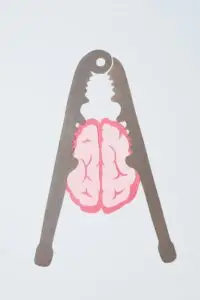 To truly understand major depressive disorder, it helps to look inside the brain. Depression is not simply a matter of attitude or willpower — it is a condition with measurable neurobiological underpinnings that affect the structure and function of the brain in ways that can be observed and studied.
At the heart of the neuroscience of depression is the concept of dysregulation — a disruption in the normal balance of neurotransmitters, the chemical messengers that allow brain cells to communicate with one another. Serotonin, dopamine, and norepinephrine are among the most studied neurotransmitters in relation to depression, and imbalances in these systems are thought to contribute to the characteristic symptoms of MDD. This is why antidepressant medications — which work by modulating these neurotransmitter systems — are a cornerstone of depression treatment.
But the neuroscience of depression goes beyond neurotransmitters. Research has shown that people with MDD often exhibit structural and functional differences in key brain regions, including the prefrontal cortex and the amygdala. The prefrontal cortex is the thinking part of the brain — the region responsible for rational thought, decision-making, and emotional regulation. The amygdala is the feeling part of the brain — the region that processes emotions, particularly fear and negative affect.
In a healthy brain, the prefrontal cortex and the amygdala communicate effectively, allowing a person to process and regulate their emotional responses. In a brain affected by depression, this communication breaks down. The amygdala becomes overactive, flooding the person with negative emotions, while the prefrontal cortex struggles to exert its regulatory influence. The result is a brain that is, quite literally, stuck in a loop of negative feeling — unable to break free through willpower alone.
This neurobiological understanding of depression has profound implications for treatment. It suggests that effective interventions must not only address the chemical imbalances in the brain but also work to restore the functional connections between the thinking and feeling regions. This is precisely the insight that has driven the development of innovative new approaches to depression treatment, including prescription digital therapeutics like Rejoyn.
MEET THE EXPERT: DR. SAUNDRA JAIN, PsyD, MS
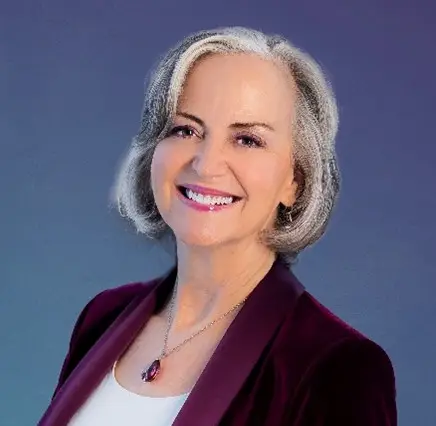 Dr. Saundra Jain is a psychotherapist, educator, and mental health advocate whose career has been defined by a commitment to making mental health care more accessible, more effective, and more human. She holds a Master of Arts degree from the University of Houston-Clear Lake, a Doctoral degree in psychology from Southern California University for Professional Studies, and an MBA from Texas Woman’s University — a combination of credentials that reflects both her clinical depth and her understanding of the systems within which mental health care is delivered.
Dr. Jain serves as an Adjunct Clinical Affiliate for the School of Nursing at The University of Texas at Austin, where she focuses on wellness and the impact of positive psychology on patient outcomes. She launched her private practice of psychotherapy in 1992, and for more than three decades she has provided services for a wide range of mental health issues, with particular expertise in depression, bipolar disorder, anxiety disorders, and ADHD.
One of Dr. Jain’s most significant contributions to the field is her co-founding of the WILD 5 Wellness Program — an evidence-based wellness initiative that integrates five key elements of healthy living: exercise, mindfulness, sleep, social connectedness, and nutrition. The program is designed to be prescriptive and easy to follow, offering a structured 90-day pathway to improved mental wellness. Dr. Jain co-authored the accompanying workbook, “WILD 5 Wellness: Ancient Practices for Modern Times: A Prescriptive and Proven 90-Day Mental Wellness Program,” which has been widely praised by both clinicians and patients.
Dr. Jain is also the senior co-author of two books written specifically for clients navigating mental health challenges: “Unleashed: Transforming My Battle With Depression” and “Unleashed: 12-Weeks to Total Mental Fitness.” These works reflect her deep belief that people living with mental illness deserve resources that speak directly to their experience — not just clinical textbooks, but practical, empowering guides that meet them where they are.
Her work in peer-to-peer education has reached a national audience, particularly in the disease states of depression, bipolar disorder, anxiety disorders, and ADHD. She serves on the Psych Congress Steering Committee, where she helps identify and address educational gaps in mental health care for healthcare practitioners. Many who have attended her educational programs have described them as transformative — changing not just what they know, but how they practice.
In the GoToHealth! episode on major depressive disorder, Dr. Jain brings her characteristic clarity and compassion to the conversation, helping viewers understand that MDD is a real, treatable medical condition — and that new tools like Rejoyn represent a meaningful step forward in the ongoing effort to expand access to effective depression treatment.
You can learn more about Dr. Saundra Jain and her work at www.saundrajain.com.
MEET THE ADVOCATE: KELLY UCHIMA
 Kelly Uchima is a 31-year-old mental health advocate, wellness content creator, and social media personality who has built a powerful platform by doing something deceptively simple: telling the truth. With over 200,000 followers across social media platforms, Uchima has become one of the most recognized voices in the online wellness community — not because she presents a polished, curated version of healing, but because she refuses to.
Uchima’s journey with mental health began early. At the age of 10, she developed an eating disorder that went unaddressed by the adults in her life. By the time she reached college in 2013, around the age of 20, she was navigating a confluence of challenges — an eating disorder, a toxic relationship, social isolation, and the absence of any meaningful mental health support. “I basically checked all the marks for, ‘Of course, she’s going to have issues,'” she has said. What saved her, in part, was the act of sharing.
She began posting on Instagram as a way to process what she was going through, and what started as personal documentation quickly became something much larger. Other people — people who were struggling with the same feelings of sadness, shame, and confusion — began to respond. “Once I started to get people saying, ‘My god, same. Wow, thank you for saying that,’ that really jump-started me to start documenting my journey,” Uchima has explained.
Today, her platform covers a wide range of topics that are often treated as taboo: IBS, therapy, eating disorder recovery, sobriety, and — at the center of it all — depression and mental health. She has been recognized as Wellness Creator of the Year at The Influence Awards in 2023, and she participated as a speaker at BodCon 2024, where she continued her mission of breaking down the stigma that surrounds mental illness.
As a Japanese woman, Uchima is also acutely aware of the cultural dimensions of mental health stigma. “There are a lot of misconceptions about Asian women, and Asian people, that we always have our stuff together when I’ve had the most chaotic life and existence,” she has said. “That’s what causes so many issues in every culture. There’s just so much experience that is hidden away.” Her willingness to push back against these cultural expectations — to be openly, unapologetically imperfect — has made her platform a lifeline for many who have never seen their own struggles reflected in the media they consume.
In the GoToHealth! episode on major depressive disorder, Uchima speaks with characteristic honesty about her personal experience with depression — including the reality that traditional treatments like medication and talk therapy did not fully resolve her symptoms, and the hope she found in learning about new approaches to depression treatment. Her story is a reminder that depression does not discriminate, that healing is rarely linear, and that community and connection are among the most powerful medicines available.
Follow Kelly Uchima on Instagram at @kellyu for ongoing content about mental health, wellness, and the real, messy, beautiful work of healing.
REJOYN: A PRESCRIPTION DIGITAL THERAPEUTIC FOR MAJOR DEPRESSIVE DISORDER
 For the millions of people who are already taking antidepressant medication but still struggling with depression symptoms, a groundbreaking new option has arrived — and it comes in the form of an app. Rejoyn is an FDA-authorized prescription digital therapeutic (PDT ) designed specifically for the treatment of major depressive disorder symptoms in adults aged 22 and older who are currently on antidepressant medication. It is not a replacement for medication or traditional therapy — it is a powerful complement to existing care, designed to address the neurobiological roots of depression in a way that pills alone cannot.
Rejoyn was developed by neuroscientists, psychologists, and psychiatrists, and it is built on a foundation of rigorous clinical science. The app works through two evidence-based methods that operate in tandem over the course of a six-week treatment program.
The first method is a brain-training exercise that involves identifying and remembering emotions on a series of faces. This exercise is designed to activate the prefrontal cortex and the amygdala simultaneously — the thinking and feeling parts of the brain, respectively. By repeatedly engaging both regions at the same time, the exercise is thought to strengthen the neural connections between them, helping the brain become better at processing emotions and breaking free from the negative thought patterns that characterize depression. This is the principle of neuroplasticity in action: the brain’s remarkable ability to reorganize and strengthen itself in response to experience.
The second method consists of short, skills-based video lessons drawn from Cognitive Behavioral Therapy (CBT) — one of the most well-validated psychological approaches to depression treatment. These lessons, each lasting approximately five minutes and completed three times per week, teach practical strategies for managing depression symptoms, including how to handle strong emotions, reframe negative thinking, and make positive behavioral changes.
Together, these two methods represent what the creators of Rejoyn describe as “physical therapy for the brain” — a structured, repeatable program of targeted exercises that build mental strength and resilience over time, just as physical therapy builds strength and mobility in the body after an injury.
The clinical evidence supporting Rejoyn is compelling. In a clinical trial of adults with depression who were also taking antidepressant medication, participants who completed the six-week Rejoyn program experienced meaningful reductions in depression symptom severity. On average, participants reported that their depression severity decreased from moderately severe to mild — a clinically significant improvement that was measured using validated tools including the Patient Health Questionnaire (PHQ-9), the Montgomery-Asberg Depression Rating Scale (MADRS), and the Clinical Global Impressions-Severity Scale (CGI-S).
Rejoyn carries a 4 out of 5 rating on the App Store (as of November 2025) and is notable for having no side effects related to the app itself — a meaningful consideration for patients who are already managing the potential side effects of antidepressant medication. It is available on both iOS and Android, and it can be obtained through a virtual consultation with CaryHealth, a telehealth provider, or through a prescription from an existing healthcare provider.
Rejoyn is not intended to be used as a standalone treatment, and it does not replace antidepressant medication or clinician-managed care. Patients who experience worsening depression symptoms or thoughts of self-harm are encouraged to contact their healthcare provider or call 911 immediately. Dedicated nurse support is available Monday through Friday, 8 AM to 8 PM ET, at 1-833-Y-REJOYN (1-833-973-5696).
WHEN TO SEEK HELP
 If you or someone you love is experiencing symptoms of depression, it is important to reach out for help. Depression is a treatable condition, and the sooner treatment begins, the better the outcomes tend to be. You do not need to be in crisis to seek support — if you have been feeling persistently sad, hopeless, or unable to enjoy the things you once loved, that is reason enough to talk to a healthcare provider.
There are many resources available for people seeking help with depression and other mental health concerns. Your primary care physician can be a good starting point, as they can assess your symptoms, rule out underlying medical causes, and refer you to a mental health specialist. A licensed therapist, psychologist, or psychiatrist can provide a comprehensive evaluation and develop a personalized treatment plan. And for those who are already on antidepressant medication but still struggling, tools like Rejoyn offer a new avenue for relief.
If you are in crisis or experiencing thoughts of self-harm or suicide, please reach out immediately. In the United States, you can call or text 988 to reach the Suicide and Crisis Lifeline, available 24 hours a day, seven days a week. You can also contact the National Alliance on Mental Illness (NAMI) helpline at 1-800-950-NAMI (6264), or visit the Substance Abuse and Mental Health Services Administration (SAMHSA) website for confidential treatment referrals at 1-800-662-HELP (4357).
You are not alone. Help is available. And as Dr. Saundra Jain and Kelly Uchima remind us — you are not broken. You are human, and you deserve support.

