
Childhood immunizations are one of the greatest success stories in the history of medicine.
Thanks to vaccines, many serious diseases that once caused widespread illness, disability, and death are now largely preventable. For new parents, navigating the world of vaccinations can feel overwhelming, especially with the amount of conflicting information available online. This guide, based on the recommendations of the American Academy of Pediatrics and the expertise of pediatricians like Dr. David L. Hill, is here to provide clear, factual information about the vaccines your child truly needs for their health and well-being.
The American Academy of Pediatrics (AAP) is an organization of 67,000 pediatricians committed to the optimal physical, mental, and social health and well-being for all infants, children, adolescents, and young adults. The AAP provides recommendations on all aspects of child health, including the recommended immunization schedule. Your pediatrician is your most trusted source of information for your baby’s health and your child’s health. They are there to answer your questions and guide you through the process of vaccination.
How do vaccines work?
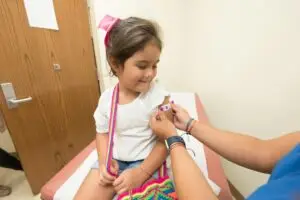 A vaccine helps your child’s immune system build protection against a disease without them having to get sick with the disease. Vaccines contain either a very weakened or killed version of the virus or bacteria that causes a disease, or a small piece of it. This is enough for the immune system to learn how to recognize and fight off the real disease in the future. This process of building protection is called immunization. When enough people in a community are vaccinated against a disease, it becomes much harder for that disease to spread. This is called community immunity or herd immunity, and it helps protect everyone, including those who are too young to be vaccinated or who can’t be vaccinated for medical reasons.
The American Academy of Pediatrics recommends a specific immunization schedule for children from birth through their teenage years. This schedule is carefully designed to protect children when they are most vulnerable to diseases. The timing of each vaccine is based on extensive research and is designed to provide the best possible protection. Here are the vaccines your child needs:
 Dr. David L. Hill, a pediatrician and past chair of the American Academy of Pediatrics Council on Communications and Media, emphasizes the importance of open and honest conversations between parents and pediatricians. He understands that parents’ questions come from a place of love and concern for their children’s health. Dr. Hill stresses that the decision not to vaccinate is a decision to leave a child vulnerable to disease. He also warns against the dangerous myth that getting a disease like measles is somehow better or more natural than getting the vaccine. The reality is that measles can be a very serious disease, leading to hospitalization and even death. In 2025, the United States saw a significant resurgence of measles, with over 2,000 confirmed cases, the highest number in over 30 years. The vast majority of these cases were in unvaccinated individuals.
The spread of vaccine misinformation is a serious public health threat.
Much of the anti-vaccine content online can be traced back to a small group of individuals, often referred to as the “disinformation dozen,” who profit from spreading fear and doubt about vaccines. Social media algorithms can amplify this misinformation, creating echo chambers where parents are exposed to a constant stream of anti-vaccine content. It is crucial for parents to be critical of the information they see online and to rely on trusted sources like their pediatrician and the American Academy of Pediatrics.
